

November 11 update
Back in May, I wrote that they were about to NASCAR college sports. Paul Finebaum had me on to talk about it. Six months later, the College Football Playoff has approved a 24-team field starting with the 2027 season. It feels like everybody got something out of this deal and nobody’s particularly happy about it.
The word you’re going to hear over and over is access. And I think that’s exactly what they’re selling. Imagine you’re an athletic director going back to the same booster who helped pay for last year’s roster. You’re asking for another check, and the guy wants to know what he’s buying. With 24 spots, you can look him in the eye and say, “We can make the playoff here.” That’s a hell of a pitch, especially at a place where the old pitch was, “Help us get to eight wins.”
How many times does that pitch work? There’s new TV money for the extra games. Does it cover enough of what schools are spending? Does a better shot at the playoff get a tired donor to write a bigger check, or does it just buy you one more year before he asks why the football program can’t pay for itself? I understand that universities have Title IX obligations and sponsor sports that depend on football revenue. If you’re going to run big-time football like a pro league, though, the football business ought to be able to sustain itself. It’s insane to build a budget around the assumption that the same people will keep making up the difference.
I thought 12 was perfect. The regular season was still sexy. A loss in September could follow you all the way to Thanksgiving, and there were enough spots to keep a bunch of teams alive into November. Twenty-four feels like taking the AP Top 25, telling one team to go home and playing a tournament. I’ll watch it. I’ll probably love a first-round game in a freezing stadium somewhere. I’ll also miss the feeling that a heavyweight could lose its season on a random Saturday in October.
And then I talked to Dusty Dvoracek on Show Pony Live. He made the case that we’re gaining a bunch of meaningful games, and I think he’s right. A three-loss team that used to be playing out the string might have a must-win game in November. Maybe a guy who would’ve shut it down to get ready for the draft sticks around because his team still has a shot. And with rosters thinner than they used to be, would you really want to draw a dangerous No. 21 seed on a cold Saturday night? I can talk myself into that game pretty damn fast.
Maybe 24 is the best fix for some of the problems we’ve created. Maybe it gives fans in a dozen more towns a reason to stay glued to the sport in November. My worry is about the games the rest of us used to clear an entire Saturday for. If both teams are probably getting in, do I still rearrange my day? Do you?
That’s what I meant by NASCAR back in May. You can change a sport to give people more reasons to tune in and still lose some of what made them tune in every week. Maybe college football pulls it off. We’re about to find out.
Below is the column I wrote on May 11, before 24 teams became official.
They’re About to Nascar College Sports

College sports is supposed to be idiot-proof. Rick and I say it on Full Ride all the time.
That is what makes the current moment so unsettling.
Since the NCAA v. Alston ruling in June 2021, chaos has become the defining feature of college athletics. Lawlessness has reigned. The foundation of college sports feels shakier than at any point in my lifetime.
Conference realignment. NIL. The transfer portal. Endless playoff debates. Tournament expansion.
These are not small adjustments around the edges. They are seismic shifts that have fundamentally altered the feel of college sports in just five years.
And that word — feel — matters.
Because from the first college football game between Princeton University and Rutgers University in 1869 until June of 2021, college sports had a distinct identity.
Yes, we all knew there was some behind-the-scenes shadiness. We joked about the occasional “$100 handshake.” Nobody was naïve.
But at its core, college sports was exactly what the name implied: college sports.
More glamorous than high school athletics, but still rooted in education.
The model was simple and powerful. Young men and women went to school, attended class, earned degrees, developed as people, and if they were talented enough, used athletics as a platform to reach the professional ranks.
In many cases, they chose a school for life.
When Schools Became Home
For generations, athletes visited campuses, fell in love with a place, and stayed three or four years.
They arrived as 18-year-old kids and left as young adults.
They built lifelong friendships. They met spouses. They established professional networks. They developed identities tied to a university and a community.
Academics mattered.
Graduation rates mattered.
Academic Progress Rates mattered.
At least they used to.
Today, we have transformed college athletics into fully professional sports.
Everything is about money.
The players.
The coaches.
The schools.
The conferences.
The television partners.
Everyone has their hand out. Everyone wants a larger piece of the pie.
And that is precisely because the pie was so extraordinary.
College sports was one of the most unique and authentically American institutions ever created. No other country had anything like it.
It was amateurism — perhaps never in its purest form, but certainly in one of its finest and most compelling versions.
The Power of Belonging
Look at guys like Jacob Hester and Bobby Carpenter.
Hester went to Louisiana State University and built his life in Baton Rouge.
Carpenter played at Ohio State University and stayed in Columbus.
That attachment is powerful.
It is why college sports matters so deeply to fans.
You attend a school. You grow as a human being. You fall in love with the campus and the people. You root for those teams for the rest of your life.
That bond is the emotional engine of college athletics.
The question is whether future generations will experience that same connection.
Minor League NFL
We have effectively turned college football into a minor league for the National Football League.
The sport has become transactional.
Professional.
Soulless.
Yes, there are still stories like Ty Simpson, a player who stayed at University of Alabama, endured adversity, and continued to grow.
But he increasingly feels like the exception rather than the rule.
The days of the Jacob Hesters and Bobby Carpenters are fading into memory.
Expanding What Was Already Perfect
Now the sport’s power brokers are once again chasing more.
The National Collegiate Athletic Association has announced plans to expand the men’s and women’s basketball tournaments from 68 teams to 76.
People love NCAA Division I Men’s Basketball Tournament because it is elegant.
They love the clean bracket.
They love the upsets.
They love the simplicity.
We are taking one of the most brilliant sporting events ever created and making it more complicated.
Will it destroy March Madness? Maybe not.
Perhaps the magic survives.
But let us be honest about why this is happening.
This is not about access.
It is about money.
The NCAA has been battered by lawsuits since Alston, and the organization is desperately searching for new revenue.
Football Is Following the Same Script
College football is no different.
Conference championship games were effectively devalued by the playoff structure.
Last year’s Big Ten Football Championship Game and SEC Championship Game carried surprisingly little impact on the final playoff rankings.
The risk outweighed the reward.
University of Alabama lost a third game in the SEC title game and still reached the playoff.
The result made the contest feel almost meaningless.
If the games no longer matter, administrators must replace them with something else that generates revenue.
Hence the push for even more playoff expansion.
The American Football Coaches Association and various conference leaders have floated larger formats, with some preferring 16 teams and others discussing 24.
Again, the primary motivation is obvious.
Money.
The NASCAR Warning
Here is what worries me most.
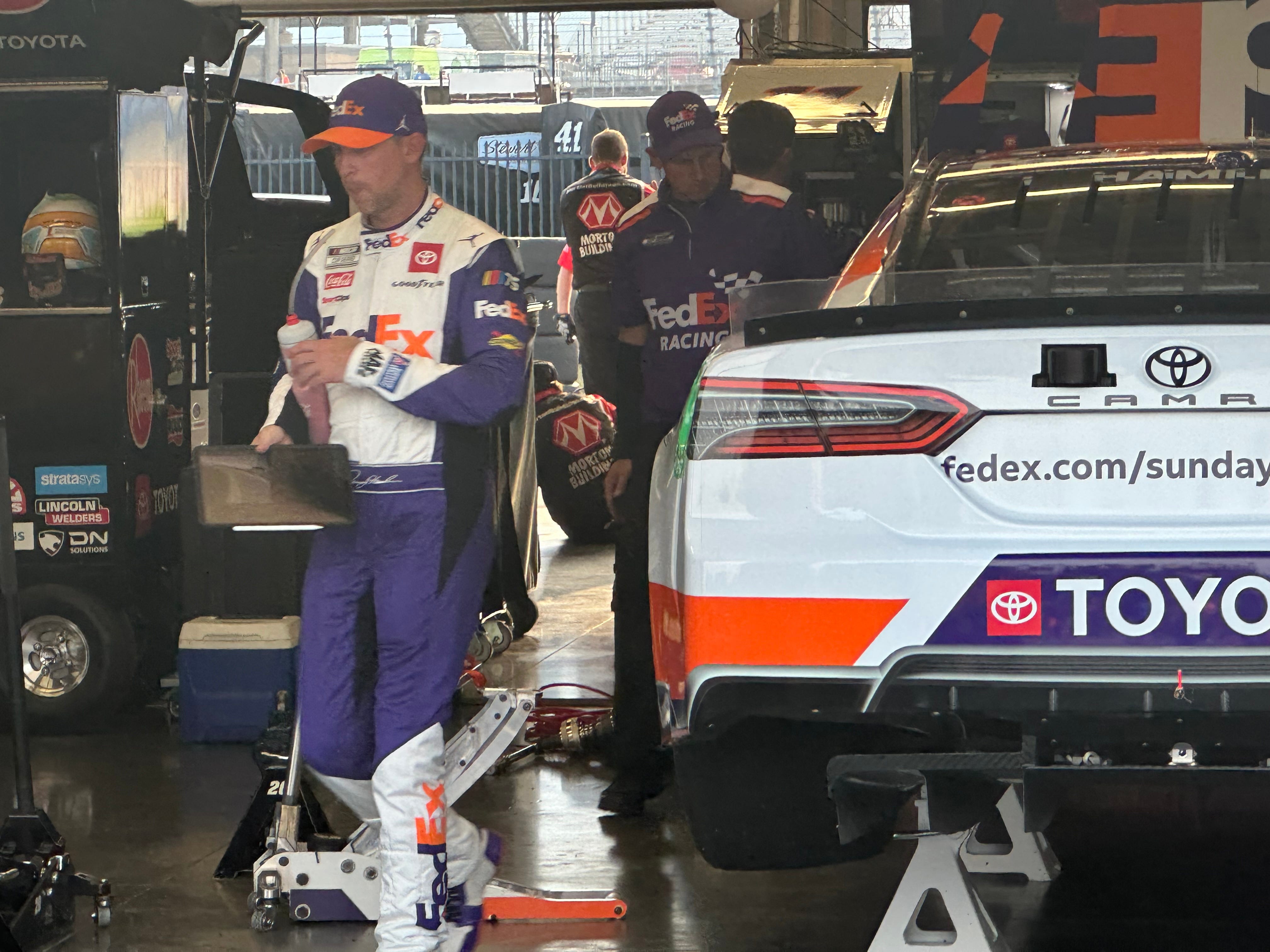
They are in danger of doing to college sports what NASCAR Cup Series did to itself.
There was a time when NASCAR was one of the hottest properties in American sports.
During the era of Matt Kenseth, Dale Earnhardt Jr., and Jeff Gordon, the sport was absolutely on fire.
At its peak, NASCAR may have trailed only the NFL in national popularity.
And because business was booming, executives assumed the growth would continue forever.
That is when they began tinkering.
They introduced a convoluted playoff system many casual fans still struggle to explain.
They altered the championship format repeatedly.
They moved away from traditional tracks and chased nontraditional markets.
Most importantly, they drifted from the culture and traditions that built the sport.
In the process, they alienated the very fans who had made NASCAR a phenomenon.
The sport still exists, and it still has passionate supporters, but it no longer occupies the place it once held in the American sports landscape.
Not because stock car racing stopped being compelling.
But because the people in charge kept changing a product that did not need to be fixed.
The Parallel Is Impossible to Ignore
That is the warning for college athletics.
When you have a product people already love, constant expansion and monetization can become a form of self-sabotage.
The assumption is always the same:
“If we add more games, more teams, more money, and more inventory, fans will continue to show up.”
Sometimes they do.
Sometimes they eventually decide the thing they loved no longer feels the same.
College sports remains one of the greatest entertainment products in America.
Its regional passion is unmatched.
Its pageantry is unparalleled.
Its emotional connection runs deeper than almost any other sport.
That is why the current direction is so concerning.
Not because change is inherently bad.
But because there is a point where too much change erodes the very soul of what made the product special.
Be Careful
College sports is not dead.
Far from it.
The appetite for the games remains enormous.
Fans still care.
Rivalries still matter.
Campuses still buzz on Saturdays in the fall and March in the spring.
But the people running college athletics should study NASCAR carefully.
They should understand how quickly a booming sport can lose its cultural dominance when decision-makers confuse short-term revenue with long-term health.
College sports is not invincible.
No product is.
And when something feels idiot-proof, that is often when leaders become most dangerous.
NASCAR once believed it could not miss.
College sports seems to believe the same thing today.
For the sake of one of the most uniquely American institutions ever created, I hope they are right.
But they had better be careful. Keep the conversation going
Keep the conversation going
Where do you land on 24? What’s one regular-season game you’d care less about, or one you’d suddenly care a whole lot more about? Tell me in the comments.
Dusty Dvoracek and I got into the case for a bigger playoff on Show Pony Live. We also talked about what it was like to call the Holy War and looked ahead to Texas A&M–Tennessee. Listen on Apple Podcasts · Find the show on Spotify · Find the show on YouTube
If you want more of my college football columns and access to the subscriber chats, join Show Pony Media as a paid subscriber.
Support the sponsors who support Show Pony Media
AR’s Hot Honey is what I’d put on pizza, wings or a biscuit while I’m watching a game. Use code SHOWPONY15 at checkout. Shop AR’s Hot Honey
4Topps Premium Seating brings the stadium experience to your own backyard. Their quick-dry mesh seating is built for spending a Saturday outside, even if it rained that morning. Explore 4Topps. Where do you land on 24? What’s one regular-season game you’d care less about, or one you’d suddenly care a whole lot more about? Tell me in the comments.

Dusty Dvoracek and I got into the case for a bigger playoff on Show Pony Live. We also talked about what it was like to call the Holy War and looked ahead to Texas A&M–Tennessee. Listen on Apple Podcasts · Find the show on Spotify · Find the show on YouTube
If you want more of my college football columns and access to the subscriber chats, join Show Pony Media as a paid subscriber.
You are right on here with all your points . As a former AD and administrator i’m so glad i’m retired. The NCAA is to blame here as once the Olympics were no longer an amateur event with the Dream Team, amateur sports changed forever but the NCAA buried their heads and got even more dug in that they were the savior of amateur sports and instead getting out in front of it they have put us in the position we are now!!
Avid Full Rider. Great Article.
My love affair with college football began similarly to the stories you share on Full Ride from your childhood.
One first game at 12 years old in Morgantown in ‘75. One Pitt National Championship run spoiled. Goalpost down. Field stormed and I was hooked for life. Not just on my Mountaineers-but on college football as a whole. As you say-best thing invented ever.
A retirement dream was to cross the country visiting every stadium and campus I could. Still want to do it. But it’s gone way down the list. I still have an unhealthy obsession with the Mountaineers. I still love Saturdays. I still watch a lot of college football and root for and against teams that have nothing to do with mine. The problem is I don’t love any of it quite as much. I hate seeing ‘Ol Crimson wave on Game Day knowing what happened to WSU and OSU. I hate what has happened to the game In such a short period of time.
For those making decisions, Hate is not what you need to worry about. Apathy is what you need to worry about When apathy sets in, it’s too late.
You and Rick keep preaching! It is fixable. Keep up the fight!