

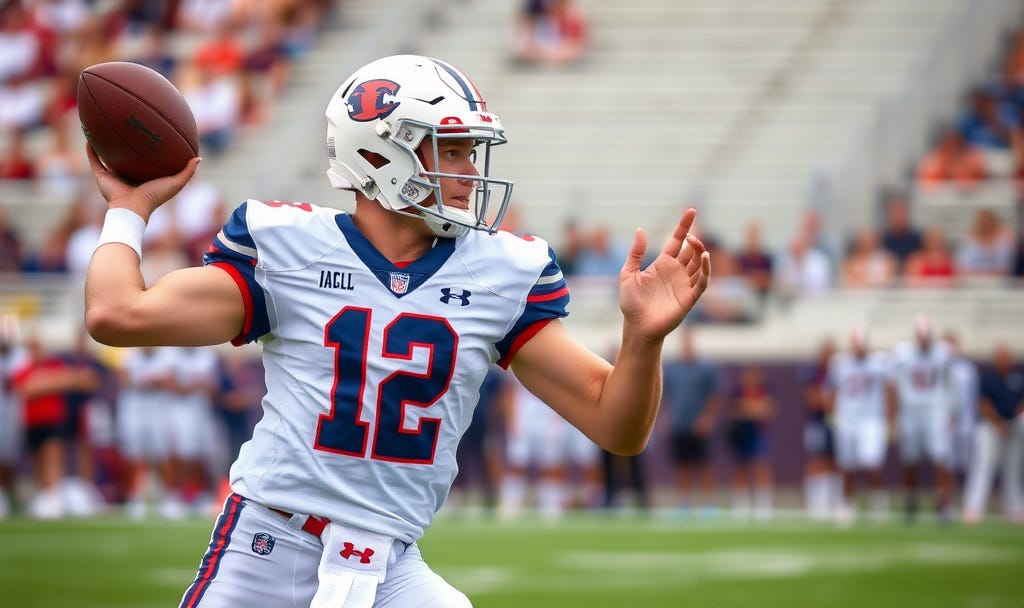
College football’s new calendar is chaos. The transfer portal opens during the playoff push, bowl games overlap roster construction, and coaching staffs are recruiting players to stay while simultaneously scouting players to replace them. The sport has become a high-speed marketplace with no offseason and even less soul. A game once built on development is now driven by dollars, and players are increasingly chasing short-term NIL money at the expense of long-term fit and growth.
Quarterbacks in particular are leveraging desperation at the position to drive up price tags. Much of the portal’s frenzy this cycle stemmed from bidding wars. Demond Williams, for example, briefly committed to remain at Washington before entering the portal again in search of a richer NIL offer. He reportedly had already agreed to a deal worth more than $4 million before reopening his recruitment. Now, after the school threatened litigation, Williams is back with the Huskies to stay.
Arizona State quarterback Sam Leavitt also benefited from the market. After waiting out the first wave of portal activity, his price only rose as quarterback-needy programs missed on other targets. He eventually joined Lane Kiffin at LSU in a lucrative deal, perhaps the best football fit for his career, but a decision clearly shaped by the highest bidder.
Transferring itself is not the problem. The reason for transferring is. In the last several years, we’ve seen quarterbacks transfer for development, for scheme, for stability or for coaching, and turn into stars. We’ve also seen players chase the biggest NIL check and vanish.
There are still examples of quarterbacks prioritizing the right things, including reigning Heisman Trophy winner Fernando Mendoza and Georgia’s Carson Beck. Both benefited from transferring or staying put for football reasons, not financial ones. Each set clear developmental goals and achieved them; in Mendoza’s case, he surpassed them.
Before the NIL era, transferring for fit was common. Joe Burrow remains the definitive example. The Ohio native realized he would never start at Ohio State, so he left for LSU. His first year in Baton Rouge was ordinary, but LSU identified what he needed: a modern passing structure. The school hired former Saints assistant Joe Brady as passing game coordinator to rebuild the offense with Steve Ensminger. The result was one of the greatest offensive seasons in college football history. Burrow went from a 57 percent passer to a 76 percent passer with Brady’s help in just one season.
Bo Nix is the modern case study. The Auburn legacy left his alma mater after three seasons marked by instability and scheme inconsistency. At Oregon, he found Kenny Dillingham and then Will Stein, and his career immediately ascended. Nix ultimately became the No. 12 pick in the 2024 NFL Draft and has since led the Denver Broncos to the No. 1 seed in the AFC in just his second season. Does that happen if he prioritizes NIL cash instead of development?
From 2019–21, Nix struggled as a passer at Auburn. After he transferred, his completion percentage jumped to 72 percent at Oregon, and his yards per attempt rose from 7.1 to 9.3. Under Dillingham and Stein, Nix went from being labeled an underachieving five-star to a franchise quarterback. It was never a question of talent. It was a question of context. He arrived at Auburn as a “golden child,” a five-star recruit and son of a program legend, but walked into booster politics, coaching turnover and schematic mismatch. Gus Malzahn fought for his job, Bryan Harsin was parachuted in as a reset, and Nix was stuck behind an offensive line that couldn’t protect him.
Oregon was the inverse, an up-tempo, RPO-heavy, rhythm-based system that accentuated his strengths and masked his weaknesses. Fit gave Nix the chance to become the player he always could be. Long-term upside beat short-term NIL.
The same story played out with Michael Penix Jr. He flashed early at Indiana under Tom Allen, but his career, and NFL draft stock exploded after transferring to play for Kalen DeBoer at Washington.
Penix showed promise at Indiana but battled injuries, including two ACL tears and a shoulder injury. He never stayed healthy long enough to realize his potential. His transfer to Washington was seen as a curiosity, given his injury history. But he reunited with DeBoer, who had coached him as Indiana’s offensive coordinator in 2019, when Penix posted the best passer rating of his Hoosiers career.
In Seattle, everything aligned. Penix completed 65 percent of his passes across two seasons as Washington’s starter, throwing 67 touchdowns and more than 9,500 yards over that span. He was a 59 percent passer at Indiana and threw for only 4,197 yards in four seasons in Bloomington. The contrast in production is stark, a testament to scheme fit, stability and health.
In 2023, Penix finished as the Heisman Trophy runner-up and led Washington to the national championship game, losing to Michigan. His stock surged so dramatically that the Atlanta Falcons drafted him No. 8 overall in the 2024 NFL Draft.
Therefore, the very recent past should serve as a loud reminder for the current player. As modern-day quarterbacks chase the biggest offers in the transfer portal, I hope they, and their families, and mostly their representatives, remember the long-term goal: sustained success in the game for as long as possible. Where you play and who you play with matter. Short-term wealth does not guarantee long-term financial security. These decisions must be made carefully. Every program now has NIL opportunities, and most elite players will earn fair market value. What’s important to remember is that it’s not always about instant gratification, but about the long game.
I think college football is in real danger of becoming just some sort of carousel for kids to make NFL money outside the NFL because most of them understand if they even make it to the NFL, their careers will be short. 1-3 years at best? But college can be 9 years! If we don’t get a grip on these multiple and or yearly transfers, all these eligibility extensions as well a making contracts more binding, it is quite scary what college football is going to look like in a year or two.
Chris,please write a column about how you became known as the "Show Pony"!