

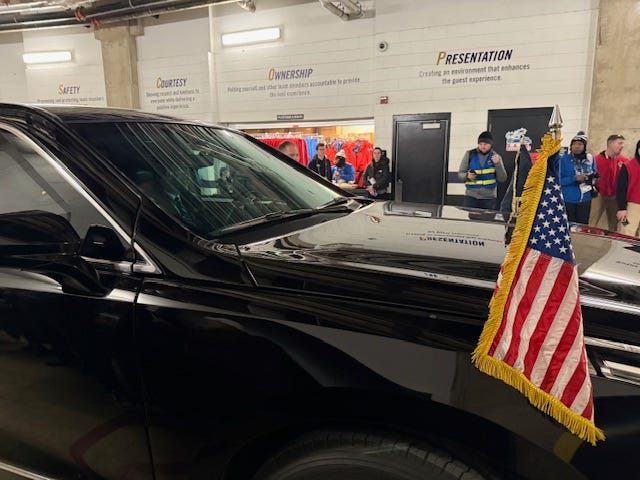
Popular college football podcast host Josh Pate has reportedly lost followers and taken criticism for having President Donald Trump on his show.
Watching the reaction unfold, I found myself asking a simple question: what would I have done in that position?
Regardless of political views, the President of the United States is the most powerful elected official in the country. From a professional standpoint, being invited to have that conversation is significant. It’s rare. It’s historic. It’s not an opportunity most people in sports media will ever encounter. Whether you agree with a president or not, saying no to that kind of platform would be difficult.
Josh understood the weight of that moment. He also understood the risk. In today’s climate, any crossover between sports and politics is guaranteed to spark strong reactions. Choosing to proceed anyway takes professional confidence — and a willingness to accept backlash.
That’s why criticism of simply booking the interview feels misplaced.
Where my frustration stems from is something different.
The disappointment for many fans wasn’t about who was on the show. It was about what was — or wasn’t — discussed in depth.
College football is at a crossroads. NIL. The transfer portal. Conference realignment. Ongoing legal battles. Enforcement questions. The sport feels unsettled. Coaches and administrators have openly acknowledged the lack of structure. Conference commissioners, including SEC commissioner Greg Sankey, have traveled to Washington seeking legislative clarity. Schools are navigating constant legal uncertainty. Everyone agrees the current model is unstable.
This interview presented an opportunity to explore potential solutions. Real solutions. A chance to probe the country’s most powerful man on college sports topics that matter to our lives as alumni and fans.
To his credit, Pate asked about fixing college football. That’s what his audience cares about. But the conversation didn’t produce much specificity about what federal involvement could realistically look like, how rules might be standardized, or what kind of framework could bring long-term stability to the sport.
That’s where the moment felt incomplete.
This isn’t about party lines. It’s about governance. College football has grown into a multi-billion-dollar enterprise operating under a patchwork of state laws, court rulings, and institutional policies. Some believe collective bargaining could eventually be part of the solution, similar to professional leagues. Others believe congressional legislation is necessary to create national standards. But there hasn’t been a clearly articulated path forward.
Fans aren’t looking for slogans. They’re looking for direction.
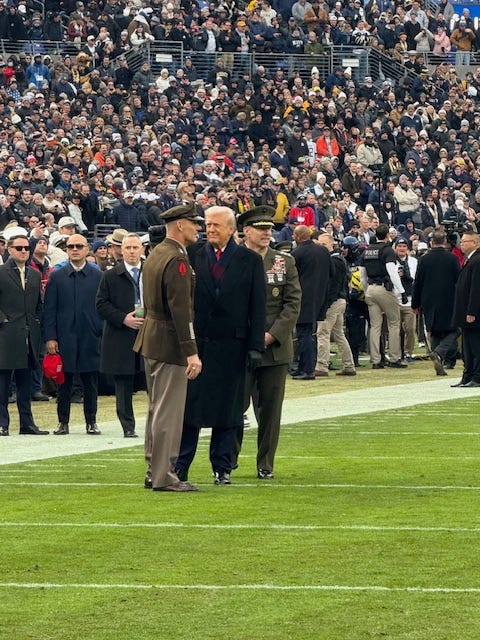
The on-field product remains incredible. Saturdays still matter. The pageantry, rivalries, and emotion are unmatched. But beneath it all, the foundation feels unsettled. Coaches are cautious. Administrators are cautious. Conferences are cautious. No one wants to implement policies that trigger lawsuits or further instability.
That’s why expectations were high for this interview. It felt like a chance to hear a vision — not political rhetoric, but practical structure. What could actually be done? What authority exists? What timeline is realistic? What protections would be in place for athletes and institutions alike?
Those answers never fully materialized.
That doesn’t mean the interview shouldn’t have happened. It doesn’t mean Josh Pate was wrong to say yes. In fact, taking that opportunity made sense professionally. But when you take a swing that big, people hope for something substantive in return.
I understand that pressure more than I’d like to admit.
I’ve failed to meet the moment in interviews before — and I probably will again. Hopefully not at that level, because that one was risky. But one memory came rushing back as I watched the reaction unfold.
I once booked Ronda Rousey at the height of her career, just weeks before the Holly Holm fight. We had ten minutes. Ten minutes with the biggest star in combat sports. And I flubbed it. I missed opportunities to ask the most pressing questions. I threw softballs. I choked. My bosses were disappointed. That sucks and all, but that’s just a small group of people, not a nation of football fans eager for answers.
When the spotlight is that bright, it exposes everything — preparation, instinct, composure. Sometimes you walk away wishing you’d dug deeper.
Josh Pate stepped into a high-pressure moment. That deserves recognition. The lingering disappointment isn’t personal — it’s structural. People are hungry for real answers about the future of the sport they love.
And for now, those answers still feel out of reach.